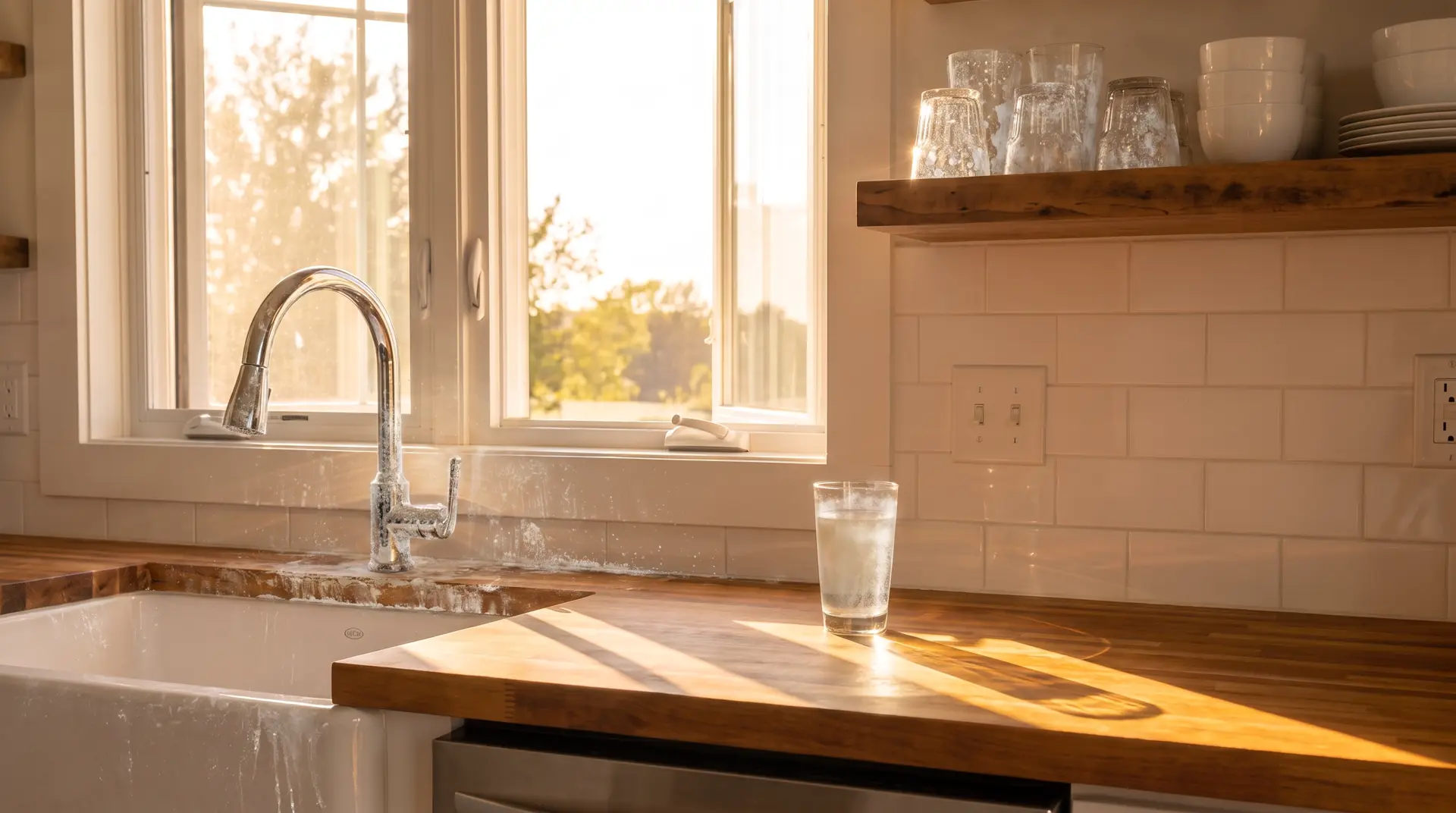
Well Water Treatment in Cedar Rapids & Eastern Iowa
Hardness, iron, rotten-egg odor, sediment, and nitrate — tested honestly, then fixed as one system instead of a stack of gadgets.
On a private well, you're the water department
Cedar Rapids city water is hard, but it arrives screened, disinfected, and monitored. A private well skips all of that. Whatever the aquifer is carrying — minerals, iron, dissolved gas, sediment, bacteria, nitrate — reaches your pressure tank exactly as the ground delivered it. Nobody treats it upstream, and nobody is required to test it but you.
That's not a reason to panic — it's a reason to have a plan. Plenty of corridor households run happily on well water for decades. The ones that struggle are almost always treating symptoms one gadget at a time — a filter for the smell, another for the stains, a softener fighting iron it was never built for — instead of testing once and fixing the water as a system. This page covers what eastern Iowa wells typically carry, how testing works here, and what an honest fix looks like.
What eastern Iowa wells commonly carry
This is limestone country, and rural wells around here tend to show the same short list of problems in varying combinations:
- Hardness — often worse than city water. USGS sampling of aquifers like ours puts the median around 23 grains per gallon for untreated wells — more than triple what softened city taps see — because the water sits in the limestone that causes it. Scale, spotted glassware, stiff laundry, short-lived water heaters — the whole catalogue, just stronger.
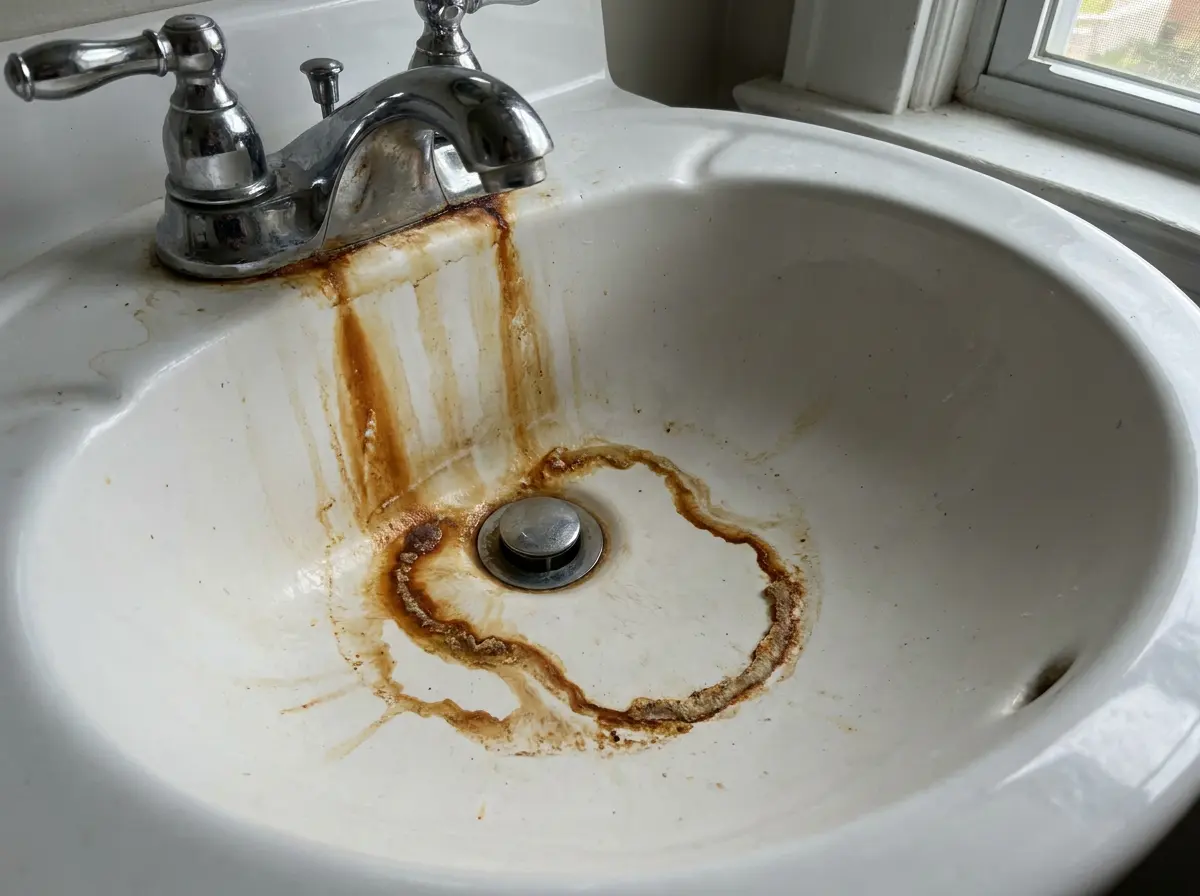
- Iron and sulfur. Orange-brown staining in sinks, toilets, and laundry usually means iron; a rotten-egg smell usually means hydrogen sulfide. The two often travel together, and they're the most visible well complaints in the corridor. Our iron & sulfur page covers both in detail.
- Sediment. Sand, grit, and fine silt that clouds the water, wears valve seats, and clogs every piece of equipment downstream.
- Bacteria risk. A properly built and sealed well is usually clean, but coliform bacteria can show up after flooding near the wellhead, after well repairs, or when a cap or casing is damaged. This is a test-and-respond issue, not a guess-and-hope one.
- Nitrate. Agricultural runoff makes nitrate a real, well-documented concern in Iowa groundwater, especially for shallower wells near row-crop ground. Levels vary widely from one well to the next, which is exactly why testing matters: nitrate has no taste, no smell, and no color, and it matters most for infants and during pregnancy. If anyone in the house is expecting or mixing formula, test before assuming anything.
Start with a real test, not a catalog
Two kinds of testing matter on a well, and they answer different questions.
For the health questions — bacteria and nitrate — a certified lab is the right tool. Many Iowa counties offer free or low-cost private well testing through state-supported programs, typically arranged through the county health department. If you haven't used yours, it's one of the better deals in home ownership, and we routinely help homeowners figure out what their county offers and make sense of the report that comes back.
For the treatment questions — hardness, iron, manganese, pH, sulfur odor, sediment — we run our own free in-home test at your kitchen sink and at the pressure tank. Together, the lab work and the field numbers tell us what the well actually needs. Frequently that's less equipment than a water-treatment brochure would like to sell you.
One treatment train, not a stack of gadgets
Well treatment goes wrong when equipment gets bought one symptom at a time, in whatever order the symptoms got annoying. Built properly, it's a single train, and the order matters:
- Sediment first. A spin-down or cartridge filter catches grit before it can foul everything behind it. (If you're on city water and thinking about filtration, that's a different job — see whole-house filtration.)
- Iron and sulfur second. Typically an air-injection oxidizing filter, sized to your measured levels, so staining and odor are gone before the water reaches the softener. Iron chews through softener resin that wasn't specced for it — if your existing softener is limping on well water, fouled resin is a common reason, and sometimes a service call plus a proper pre-filter saves the unit.
- Softening third. A metered softener handles the now-iron-free hardness for the whole house.
- Reverse osmosis last, at the kitchen sink, for drinking and cooking water. RO is also the practical home fix when nitrate shows up in the lab results — it removes it at the one tap where you actually drink.
One more tool worth knowing about: shock chlorination — a one-time heavy chlorination of the well and household plumbing — is the standard first response after a bacteria hit or a well repair. It fixes an event, not a chronic problem, and we can do it or walk you through doing it yourself.
What well water treatment costs
The honest answer depends entirely on what your water tests at, which is why we test before we quote. As a rule of thumb for professionally installed equipment in the corridor:
| Situation | Typical installed range |
|---|---|
| Single-issue fix (sediment filter, or one contaminant) | $700 – $2,000 |
| Softener + iron/sulfur filter combo | $3,500 – $6,000 |
| Full treatment train (sediment + iron/sulfur + softener + RO) | $5,000 – $8,500+ |
What moves the number: your measured iron, sulfur, and hardness levels, the flow rate your well can actually deliver, space and drain access in the utility area, and whether any existing equipment is worth keeping. High iron in particular tends to push the equipment up a size, and a low-yield well sometimes needs different valving to backwash properly. After the test you get one written quote for the whole train — and it's valid whether you do it all at once or in stages.
Worth saying plainly: a real test removes items from the quote as often as it adds them. Plenty of corridor wells need only part of the train, and we'd rather tell you that than sell you a tank you don't need.
How the work goes
- Test — our free in-home test for the treatment numbers, plus help arranging county lab testing for bacteria and nitrate if you haven't had it done.
- Plan — one written quote for one treatment train, with the reasoning behind each stage explained in plain English.
- Install — most single-day, clean and labeled, with bypass valves so any stage can be serviced without shutting the house down.
- After — a simple maintenance schedule, filter-change reminders, and a nudge to retest the well annually.
We treat wells across the corridor — Cedar Rapids, Marion, Hiawatha, Robins, Fairfax, Ely, North Liberty, and Coralville — and plenty of the rural ground in between. If you're not sure whether your place is in range, call (319) 555-0134 and ask.
Asked by nearly every well owner we meet.
How often should I test my well?
The common recommendation is at least once a year for bacteria and nitrate — plus any time the taste, smell, or color changes, after flooding near the wellhead, and after any well repair. Many Iowa counties make the annual test free or cheap through state-supported programs, so there's little reason to skip it.
Why does my well water smell like rotten eggs?
That's almost always hydrogen sulfide gas, often produced by harmless sulfur bacteria in the well or aquifer. The usual fix is an air-injection oxidizing filter, sized from your test — see iron & sulfur removal. One useful clue first: if the smell is only in hot water, the culprit may be your water heater's anode rod, which is a much cheaper fix.
Does boiling water remove nitrate?
No — and it's worth being blunt about this one. Boiling actually concentrates nitrate as water evaporates. The practical home fix is treatment that physically removes it, usually a reverse osmosis system at the drinking tap. Until it's handled, use a different water source for infant formula if your well has tested high.
What if the test finds bacteria?
Don't panic — it's common after floods and well work. The usual sequence: shock-chlorinate the well and plumbing, flush it through, then retest. Use bottled or boiled water for drinking until a clean retest comes back (boiling does kill bacteria, unlike nitrate). If tests keep coming back positive, the well itself needs inspection — cap, casing, seal — and continuous disinfection such as UV can be added to the treatment train.
Do you treat wells outside Cedar Rapids?
Yes — Cedar Rapids, Marion, Hiawatha, Robins, Fairfax, Ely, North Liberty, Coralville, and the rural properties between them. Same pricing and the same workmanship warranty anywhere in the corridor.

Find out what your well is actually doing.
Free in-home test for hardness, iron, and sulfur — plus help arranging county lab testing for bacteria and nitrate. Real numbers, plain English.