Iron & Sulfur Removal for Eastern Iowa Water
Orange stains in the sink, rust in the toilet tank, and that rotten-egg smell usually come from the same place — and they're fixable at the point where water enters your house.
What the orange and brown stains actually are
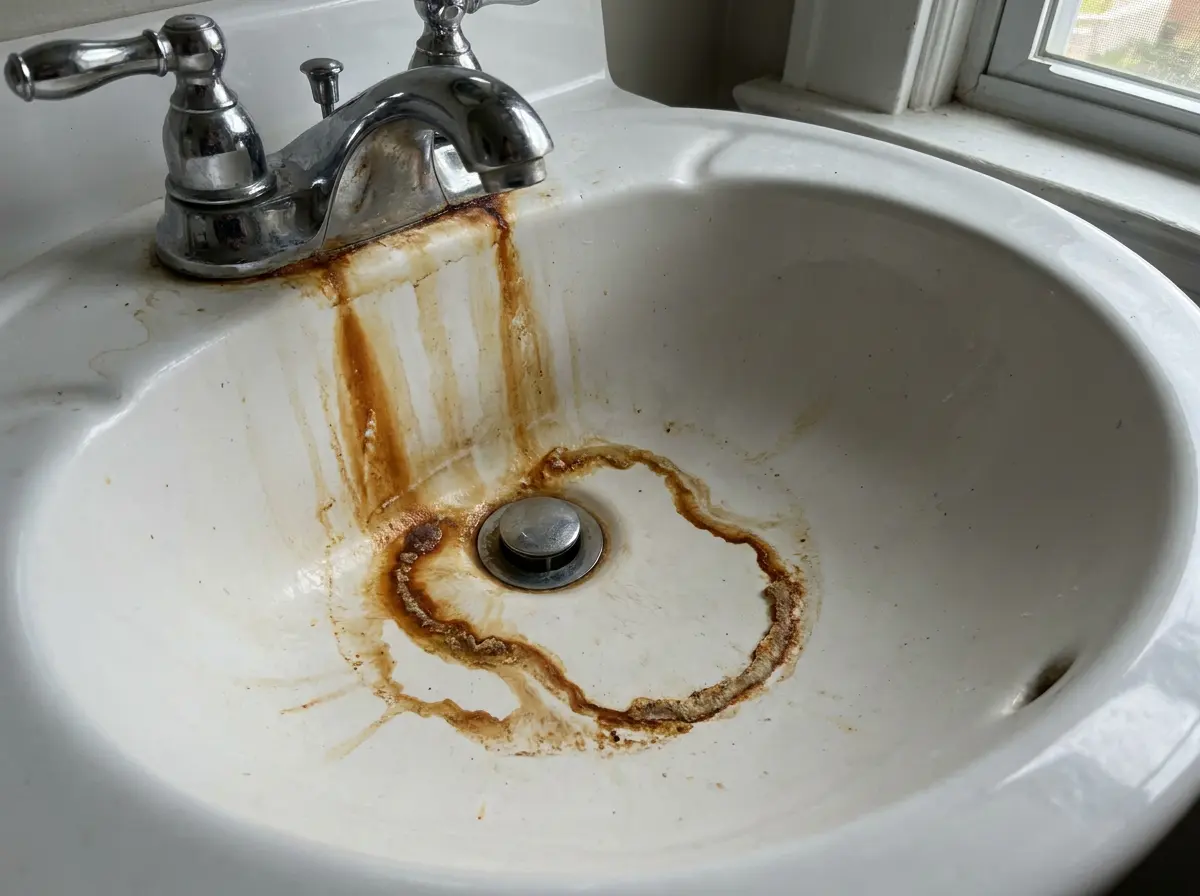
The orange ring in the toilet, the brown streaks under the faucet, the rust tint in a white load of laundry — that's iron, and around here it typically shows up in one of two forms. Ferrous iron is dissolved: the water comes out of the tap perfectly clear, then the iron reacts with air and settles out as orange-brown stain on whatever the water touches. Ferric iron is already oxidized: tiny rust particles that tint the water or leave sediment in the bottom of a glass. Plenty of Eastern Iowa wells carry some of both.
It doesn't take much. Iron becomes a staining nuisance at a small fraction of a part per million, and wells in limestone country commonly run well past that. The form matters as much as the amount, because dissolved and particulate iron are removed by different means — which is why we test your water before recommending anything.
A quick kitchen clue for which one you have: draw a glass of cold water and let it sit on the counter. If it starts clear and turns orange over the next hour or so, that's dissolved ferrous iron oxidizing in front of you. If it's tinted or gritty from the first pour, that's ferric. We still confirm with a proper test, because plenty of wells carry a mix and the numbers decide the equipment.
The rotten-egg smell, explained
If your water smells like rotten eggs, you're smelling hydrogen sulfide — a gas usually produced underground by harmless sulfur bacteria working on minerals in the aquifer. It stays dissolved while the water is under pressure and escapes the moment the water hits open air. That's why the smell is strongest in the shower: hot water and spray release the gas fastest.
One honest wrinkle before you buy anything: if only your hot water smells, your well may not be the problem. The magnesium anode rod inside a standard water heater — the sacrificial part that protects the tank from corrosion — can react with sulfate in the water and generate hydrogen sulfide right there in the tank. When that's the cause, swapping the rod for an aluminum-zinc or powered anode commonly solves it for a few hundred dollars, with no whole-house equipment at all. We check for this first, because selling you a filter for a water-heater problem would fix nothing.
Why a softener alone can't keep up
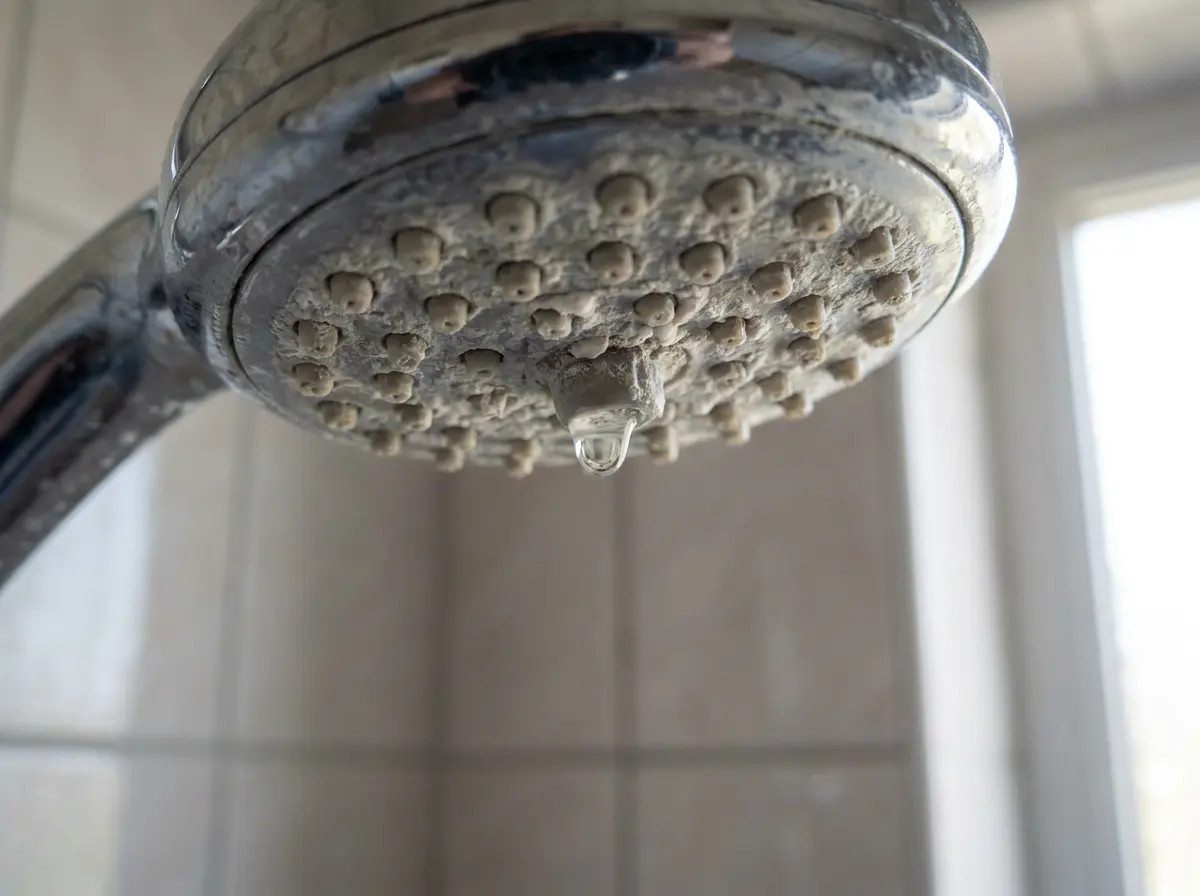
A water softener can catch a little iron as a side effect of its main job — as a rule of thumb, somewhere around one part per million, and only if that iron is still dissolved. Ask it to do more and the iron plates onto the resin bed. The softener loses capacity, regenerations stop keeping up, and you end up with water that's hard and orange, plus a fouled unit. Particulate ferric iron is worse still — resin can't exchange a rust particle, so it just packs into the bed. And hydrogen sulfide passes through a softener untouched, because resin trades minerals, not gases.
If your existing softener is limping because it's been fighting iron it was never specced for, a service call can often recover it. But the durable fix is to stop the iron before it ever reaches the resin.
How dedicated iron and sulfur filtration works
The workhorse for corridor wells is an air-injection oxidizing filter, and the idea is simple. The system holds a pocket of compressed air at the top of its tank. Incoming water sprays through that pocket, which converts dissolved iron and hydrogen sulfide into solid particles — the same reaction that stains your sink, deliberately triggered inside the tank instead. A bed of catalytic media below traps the particles. Every few nights the system backwashes: it flushes the trapped solids down the drain, draws in a fresh air pocket, and resets for the next day.
- No chemicals to buy — the oxidizer is air. No cartridges to change, no salt of its own.
- Handles iron and sulfur together — at the levels most local wells carry, one properly sized unit typically covers both.
- Heavy cases get a different tool — unusually high sulfide, severe iron, or iron bacteria call for a chlorine- or peroxide-injection system with a contact tank. That's a minority of homes; the water test tells us which one yours is.
Worth noting: if your complaint is chlorine taste on city water rather than stains and odor on a well, that's a different problem with different media — see whole-house filtration.
Pairing with a softener
The order matters: iron filter first, softener downstream. The filter takes out the iron and the odor; the softener handles the hardness — which on wells around Cedar Rapids commonly runs 20 grains per gallon and up. Plumbed in that order, the resin is protected and each tank does one job well. If you're on a well and facing the full menu — hardness, iron, odor, maybe nitrate — start at well water treatment, since one test scopes the whole system. And for drinking water that tastes as good as it looks, a reverse osmosis tap at the kitchen sink is the finishing touch.
What iron and sulfur removal costs
The honest answer is a range, because the right equipment depends on what the test finds. As a rule of thumb for professionally installed systems in this area:
| Situation | Typical installed range |
|---|---|
| Air-injection iron filter, installed | $1,800 – $2,900 |
| Iron filter + water softener combo | $3,500 – $6,000 |
| Sulfur treatment (anode swap up to dedicated filter) | $400 – $2,900 |
What moves the number: your measured iron level and form, the hydrogen sulfide level, household flow rate, whether iron bacteria are present, and how close the install spot is to a drain and outlet. The low end of the sulfur row is the water-heater anode fix — when that's all you need, that's all we'll quote. We test first, then put the real figure in writing.
Running cost: an air-injection filter uses some water for each backwash and a little electricity for the valve — no salt, no cartridges, no chemicals. The media bed typically lasts for years before it needs replacing.
What happens to the stains
Fair expectations: from the day the system goes in, new staining stops — the iron never reaches your fixtures again. Existing stains don't dissolve on their own; they need one good cleaning. Rust-specific or oxalic-acid cleaners commonly take iron staining off porcelain and fiberglass, though surfaces that sat stained for many years can be permanently etched underneath. After that one cleanup, things stay clean — which is the whole point.
We install and service iron and sulfur systems across Cedar Rapids, Marion, Hiawatha, Robins, Fairfax, Ely, North Liberty, and Coralville. If you'd rather talk than read another page, call (319) 555-0134 — a short conversation usually tells us whether you're looking at an anode rod, a fouled softener, or a genuine iron problem.
Asked on nearly every well call.
Will one filter handle both iron and sulfur?
Usually, yes. An air-injection oxidizing filter converts both dissolved iron and hydrogen sulfide into solids and traps them in the same media bed. At the levels most Eastern Iowa wells carry, one properly sized unit covers both. Unusually heavy sulfide or iron bacteria can call for a chemical-injection system instead — the water test settles it before you spend anything.
Why does only my hot water smell like rotten eggs?
That points at the water heater, not the well. The standard magnesium anode rod inside the tank can react with sulfate in your water and generate hydrogen sulfide right there. Swapping it for an aluminum-zinc or powered anode commonly fixes the smell for a few hundred dollars — no whole-house equipment needed. We check this before quoting anything bigger.
Will the orange stains come back after I install an iron filter?
New staining stops once a properly sized system is running, because the iron no longer reaches your fixtures. Existing stains need one good cleaning with a rust-specific or oxalic-acid cleaner — they don't fade on their own. After that, fixtures stay clean as long as the system is maintained.
Does shocking the well with bleach fix iron or sulfur?
Temporarily at best. Chlorinating the well can knock down iron and sulfur bacteria for weeks or a few months, and it's sometimes worth doing as maintenance. But it does nothing about dissolved mineral iron coming from the aquifer itself, so the stains and smell typically return. Continuous treatment is the durable fix.
How much does an iron filter for well water cost?
As a rule of thumb, a professionally installed air-injection iron filter runs about $1,800–$2,900 around Cedar Rapids. Pairing it with a softener for hardness typically lands the combo at $3,500–$6,000. Your measured iron and sulfide levels, flow rate, and plumbing access move the number — we test first and quote in writing.
Find out what's actually in your water.
Free in-home test: iron, hardness, and odor sourcing — real numbers, plain English, and a written quote only if you want one.